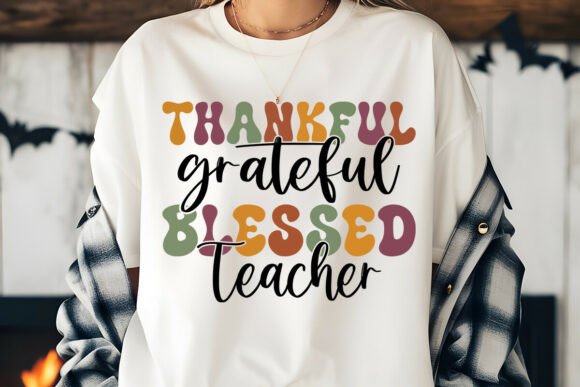
Evaluating the Thankful Blessed Teacher Embroidery Design
As someone who has stitched countless designs for clients and my own shop, I always look at a new file with a practical eye. It’s not just about the art on the screen; it’s about how it will translate into thread on fabric, and ultimately, how it will feel as a finished product in someone’s hands. Today, I’m considering the Thankful Blessed Teacher SVG for real project use.
A First Impression That Sets the Tone
My immediate take is that this design carries a warm, classic sentimentality. The phrase “Thankful Blessed Teacher” isn’t flashy or trendy—it’s sincere and heartfelt. This is the kind of embroidery design that speaks directly to appreciation. It naturally belongs on gifts, on personalized items meant to convey gratitude. The layout and lettering style feel traditional, which I think is its strength. For a teacher’s gift, a vintage-style apron, or a keepsake pillow, this aesthetic is perfect. It doesn’t scream; it whispers with respect.
Where This Design Finds Its Home
Thinking through my recent projects, I can see this file working beautifully in several real-life scenarios. Let’s say a client requests a custom embroidered tote bag for a retiring educator. This design, stitched perhaps in a deep burgundy or navy thread on a natural canvas bag, would look exceptionally dignified. The high-resolution nature of the provided files means resizing should be clean, allowing it to be a central, statement piece on the bag.
For small business merchandise, like an Etsy seller focusing on teacher appreciation gifts, this could be a cornerstone design. Stitched onto the pocket of a soft sweatshirt or on a crisp apron, it becomes a product with clear intent and market. As a personalized gift, it could grace a baby item for a teacher’s new child, or a kitchen towel for a holiday gift basket. Its clarity makes it suitable for embroidered patches, which could then be applied to caps or jackets.
Visual Appeal and Professional Impact
In execution, the success of this embroidery file hinges on stitch clarity. The sentiment is strong, so the stitching must be clean to support that. On a finished product, clean lettering from this design elevates the perceived value. It looks deliberate and professional, which builds customer trust in your handmade product. For a craft business, using such a legible, heartfelt design consistently across products—like on pillow covers and tea towels—can enhance brand consistency. It’s inherently giftable, and that emotional recognition is a powerful driver for buyer engagement.
Considerations for Successful Stitching
This is where practical judgment comes in. While the design’s traditional style is an asset, it requires careful handling in certain embroidery project situations. Any design with lettering demands attention to detail.
I would be cautious using it at very small hoop sizes. Tiny lettering can become lost or blurry if the stitch density isn’t managed well. Stitch density is key—you want the fills to be solid but not so dense that they distort thinner fabrics like standard t-shirts. On textured fabrics like some sweaters, or on dark fabric where you might use a light thread, a thorough test will tell you if you need to adjust the design slightly for clarity.
Curved surfaces like caps can be tricky with linear designs; the curvature might require stabilizing the design’s orientation. Also, consider the end use. If the item, like a child’s baby embroidery blanket, will need frequent washing, you’ll want to ensure the stitch structure is robust and that you’re using quality thread.
A Designer’s Practical Notes Before Hooping
My routine advice applies here strongly. Always test the design on scrap fabric first. Use the same material you plan for the final product. This is non-negotiable. Check thread color contrast against your background fabric—run a black and white mockup to see if the values hold up. This helps visualize it on both light and dark backgrounds.
Review stitch density in your software before sending it to the machine. Confirm hoop size compatibility and use proper stabilizer for your specific fabric, whether it’s a stretchy knit for a sweatshirt or a rigid canvas for a tote. Inspect small details in the provided PNG file at full size to understand the level of detail you’ll be stitching.
Finally, a crucial step for any digital embroidery file used commercially: check whether the design works for both personal and commercial projects. The product description notes it’s ready for printing, resizing, coloring, and modifying, but you must confirm licensing before selling finished items or digital products. As a digital product seller or apparel decorator, understanding your rights to use and sell the finished product is fundamental to your business integrity.
The Final Stitch: A Design With Clear Purpose
The Thankful Blessed Teacher SVG isn’t a flashy, all-purpose graphic. It’s a design with a specific, heartfelt purpose. That’s its greatest value. In the hands of a knowledgeable maker, it can be transformed into a truly meaningful custom apparel item, a cherished holiday embroidery gift, or a reliable product line for a small shop. Its success will come from pairing its sincere theme with meticulous embroidery technique—the right fabric, the right thread, the right stabilizer, and the right intent. When all those align, you’ll have a product that doesn’t just look good; it feels right, and that’s what turns a simple stitched design into a keepsake.