A Professional's Take on the Nacho Average Teacher Design
When a new embroidery file lands on my desktop, my first question isn't just about aesthetics. It’s about practicality. How will this translate from a digital preview into a tangible, stitched product that feels good, sells well, or delights a recipient? The Nacho Average Teacher SVG PNG prompts exactly that kind of thinking. It’s a design with a clear, playful mission, and from the perspective of someone who’s been stitching for clients and my own shop for years, here’s how I see it performing in real project use.
The Mood and Immediate Application
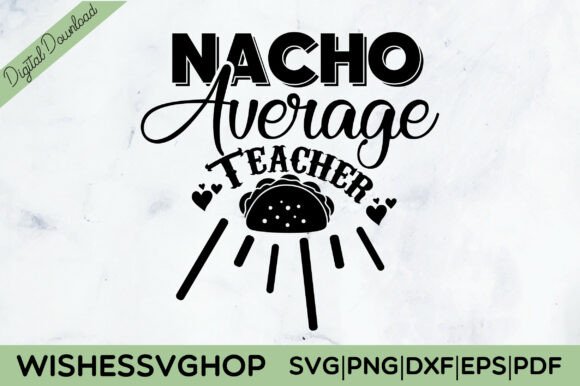
The name itself sets the tone: friendly, celebratory, and slightly cheeky. This isn’t a formal, ornate tribute; it’s a warm, lighthearted acknowledgment. Visually, the phrase suggests a layout that’s likely bold and central, perfect for a statement piece. For an embroidery designer, this immediately sketches a mental map of ideal applications. I picture it stitched onto a cozy cotton sweatshirt for a teacher’s gift, emblazoned on a canvas tote bag for a classroom volunteer, or appliquéd onto a soft baby blanket for a new mom who’s also an educator. The personality is gift-ready. It feels tailored for personalized products where a touch of humor and genuine appreciation is the goal.
Performance Across Real Embroidery Projects
Let’s walk through a specific scenario. Imagine I’m preparing a custom embroidered tote bag for a small shop’s “Teacher Appreciation Week” collection. Using the Nacho Average Teacher SVG PNG as my embroidery file, I’d consider several factors. On a sturdy canvas bag, the design’s bold lettering would likely translate into clean satin stitches or solid fill stitches, offering excellent readability and a premium handmade presentation. The contrast against the natural fabric would be striking.
This strength extends to other custom apparel: t-shirts, aprons (perfect for a teacher who loves cooking), or embroidered patches for a denim jacket. On a baby item, like a knit sweater, the playful theme works beautifully, but the fabric texture and stretch would require careful stabilizer choice to keep the stitches smooth. For holiday embroidery gifts—think a Christmas kitchen towel or a cozy pillow cover—the design adds a personal, non-seasonal touch that makes the gift feel uniquely considered, beyond a generic holiday motif.
For Etsy sellers and craft business owners, this design acts as a ready-made design asset. It can elevate a simple product into a niche offering. A plain tea towel becomes a “Teacher’s Kitchen Towel”; a standard cap becomes a “Thank You Teacher Hat.” This versatility directly affects product value and buyer engagement. Customers browsing for teacher gifts recognize the sentiment instantly, and that recognition builds customer trust in your shop’s curation.
Points of Careful Execution
No design is universally perfect, and a professional review must highlight where attention is needed. The likely detail in “Nacho Average Teacher” means small lettering could be a consideration. On very small hoop sizes, intricate serifs or condensed fonts might lose clarity if the stitch density isn’t optimized. Stitching on dark fabric demands thoughtful thread color selection—bright, contrasting hues are essential to maintain the design’s cheerful vibe.
Textured fabrics like thick sweaters or curved surfaces like caps require extra stabilization to prevent puckering, especially around any detailed corners. And for products destined for frequent washing—like adult sweatshirts or kids’ items—a robust stitch structure is key. This is where testing is non-negotiable. I’d always run this machine embroidery design on scrap fabric first, mimicking the final project’s material, to check for any thread snags or density issues in the dense stitch areas.
Visual Impact and Professional Considerations
Beyond the stitch itself, this design affects the entire finished product perception. On a personalized gift, it conveys a specific message with a handmade touch, which often feels more valuable than a store-bought card. For a small shop product, it supports brand consistency if your shop focuses on celebratory or educational themes. The stitching clarity of a well-executed version speaks to your professionalism as a maker.
Before committing to a bulk run for craft fair products, I’d test the design in both black and white printable mockups to see how it reads on different backgrounds. Does the layout balance well on a left chest vs. a center back? This prep work ensures the final commercial embroidery project meets expectations.
Essential Designer Notes Before Hooping Up
My process with any new file, including this one, follows a practical checklist. First, since the product description notes it’s an instant download with a zipped file containing an SVG, I understand it’s a vector graphic suitable for scaling. However, specific hoop size recommendations, exact stitch counts, or machine compatibility details aren’t provided here. Therefore, my first step would be to open the file in my embroidery software to assess its default size and recommended hoop, and to see if any stitch type assignments (like running stitch for outlines) are predefined.
- Always test on scrap fabric identical to your project fabric.
- Check thread color contrast against both light and dark fabric texture backgrounds.
- Review the stitch density in your software to ensure it’s appropriate for your chosen material—too dense can stiffen thin fabric.
- Inspect small details, like the spaces between letters, to ensure they’ll stitch cleanly.
- Confirm the licensing terms for this digital embroidery file before using it for commercial projects or selling the finished items. The product category is Crafts and type is Graphics, which typically implies use in crafted products, but the specific license should be verified.
The Nacho Average Teacher SVG PNG is, from a designer’s eye, a strong contender for projects centered around appreciation and lighthearted celebration. Its potential on custom apparel, embroidered patches, and personalized gifts is clear. The key to unlocking that potential is the same as with any design: treating the digital file as a blueprint and applying real-world embroidery wisdom to translate it into something tactile, durable, and delightful. That’s where the true craft lies.